

Tow-rig notebook · September 5, 2026
Ram 1500 Tire Load Planning for Towing a Side-by-Side Trailer
A side-by-side may fit the trailer perfectly and still leave the tow vehicle’s rear axle doing more work than expected. The useful tire decision starts with the truck as actually loaded, not with a maximum-tow headline or the number molded on a sidewall.
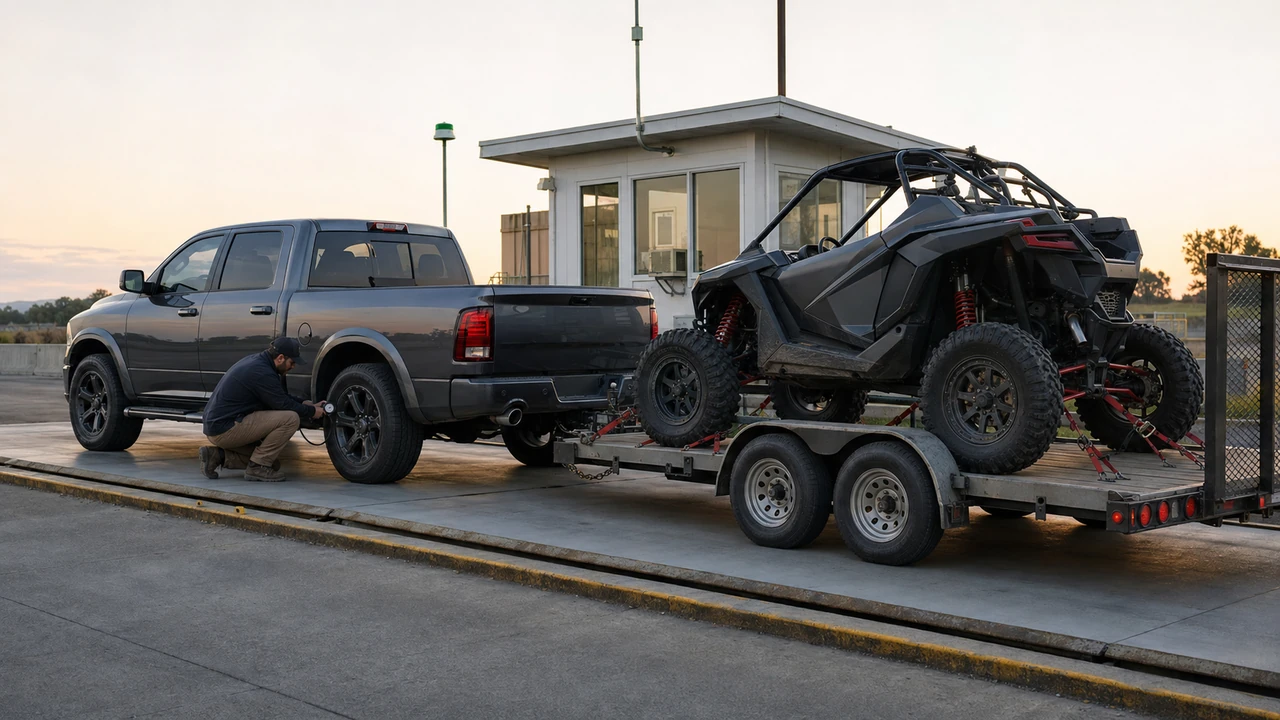
Begin at the driver-door label and the exact owner’s manual for the truck. The NHTSA TireWise guidance explains why the vehicle maker’s cold-pressure value—not the maximum pressure printed on a tire—is the starting point. Record the original tire size, cold pressures, payload statement, GVWR and both axle ratings before changing the tire or loading the trailer.
Then write down what the tow day adds: driver and passengers, hitch hardware, tongue weight, fuel, tools, coolers, spare parts and anything carried in the bed. Trailer tongue weight is carried by the truck, so it uses payload and changes rear-axle load even though the UTV itself sits behind the bumper. A paper towing capacity is not permission to exceed the truck, axle, wheel, hitch or tire limit.
Build the limit sheet for this exact Ram
Ram 1500 ratings vary by model year, cab, bed, drive system, engine, axle ratio and equipment. Ram’s official 2025 payload and towing guide shows how widely maximum payload and trailer ratings can differ within one model line. Use the label and documentation for the VIN in front of you; do not transfer a figure from a differently equipped truck.
The limit sheet should keep separate numbers separate. GVWR limits the loaded truck. Rear GAWR limits the rear axle system. The tire’s load index and maker data describe tire capacity at stated conditions. Wheel, hitch and receiver ratings add their own ceilings. The working limit is the first one the actual combination reaches, not the largest number in the brochure.
Once those truck-specific limits are written down, the DodgeGo comparison can help organize a Ram tire shortlist by use. It is a research step, not a substitute for the door label, the tire maker’s data or a qualified installer confirming size, load capacity, wheel compatibility and clearance on the actual truck.
Weigh the combination you will really tow
Load the side-by-side, straps, ramps, fuel cans and trail gear exactly as they will travel. Put the usual people and bed cargo in the Ram. At a suitable public scale, capture the loaded truck with the trailer attached, including the rear-axle reading if the scale layout permits it. A second measurement with the trailer disconnected can help show how much load the connected trailer is adding to the truck.
Do not turn that difference into a universal tongue-weight prescription. Trailer design, hitch type and vehicle instructions matter. The practical point is simpler: a measured combination reveals whether the rear axle is closer to its limit than the total truck figure suggests. It also exposes changes that advertising numbers hide, such as a heavy steel ramp, a bed-mounted spare, two extra passengers or the UTV positioned too far forward.
If the measurement is too close to a limit, reduce or reposition load only within the truck, hitch and trailer manufacturers’ instructions, then weigh again. A tire with a higher printed capacity does not raise the truck’s GVWR, GAWR, hitch rating or wheel rating. Suspension add-ons do not rewrite those certified limits either.
Check the tire as part of a system
Inspect all truck and trailer tires cold. Confirm size and load markings, measure pressure with a reliable gauge, and look for cuts, bulges, exposed cords, cracking, embedded objects and uneven wear. Check the spare tires too. Set pressure from the vehicle and tire manufacturers’ information for the actual setup; never bleed a warm tire down merely to match a cold specification.
Clearance needs a loaded check. With the side-by-side secured and the trailer connected, look around the truck’s rear tires at the fender liner, suspension, brake hose and any aftermarket component. Turn the steering through its range where appropriate for the front tires. A tire that clears on an unloaded driveway may behave differently with tongue weight, passengers and travel movement.
Secure the UTV and every loose item using hardware suitable for the load and trailer. NHTSA’s secure-your-load guidance is a useful reminder that cargo must not shift or leave the vehicle or trailer. Recheck straps, safety chains, breakaway cable, coupler, lights and tire temperatures at an early safe stop; unusual heat, pressure loss or a change in stance calls for investigation, not a faster schedule.
Make a departure decision, not a shopping decision
The tire shortlist comes after the load is known. The departure decision comes after the selected tire, wheel, truck and trailer have been checked together. Keep the scale ticket and the limit sheet in the tow kit so a new passenger, tool chest, spare wheel or different UTV triggers a fresh calculation instead of a guess.
If any rating is missing, if the rear axle cannot be kept within its limit, or if size and clearance remain uncertain, stop and ask the vehicle or tire manufacturer and a qualified installer. The same discipline applies before a trail recovery: pause while the whole system can still be inspected. Our winch-line field note uses that pause to control people and rigging; this tow-rig notebook uses it to keep the truck, tires and loaded trailer inside their real limits.
What to keep with the scale ticket
Keep the exact Ram owner’s manual, the driver-door tire and loading label, the tire maker’s current load data, the trailer and hitch instructions, and the measured axle weights together. Recheck the package whenever the truck, tire size, wheel, hitch, trailer, UTV position or carried equipment changes.