

Trail-to-bank packing
Pack the fishing stop, not just the UTV bed
At the parking spot, the useful load is the part you can carry away from the vehicle. A rod case beneath a cooler, a phone charging in the cab and a tackle bag buried under recovery gear may all have survived the ride. They still leave an awkward unpacking job before the first cast.
Plan a bank-fishing stop backward. Decide what goes with you on foot, put that equipment into a manageable kit, then work out how to carry it securely in the UTV. The parking place and permitted walking route are part of that plan. Reaching water does not establish permission to drive to its edge or fish there.
Start with the load your vehicle can carry
Make a place for the fishing kit after accounting for the people, accessories and other equipment already coming along. A cargo-box rating is not the vehicle's total capacity. The RANGER load-capacity guidance, for example, includes occupants, accessories, cargo and hitch load in the total. Use the labels and manual for your own model; a figure from another UTV is not a substitute.
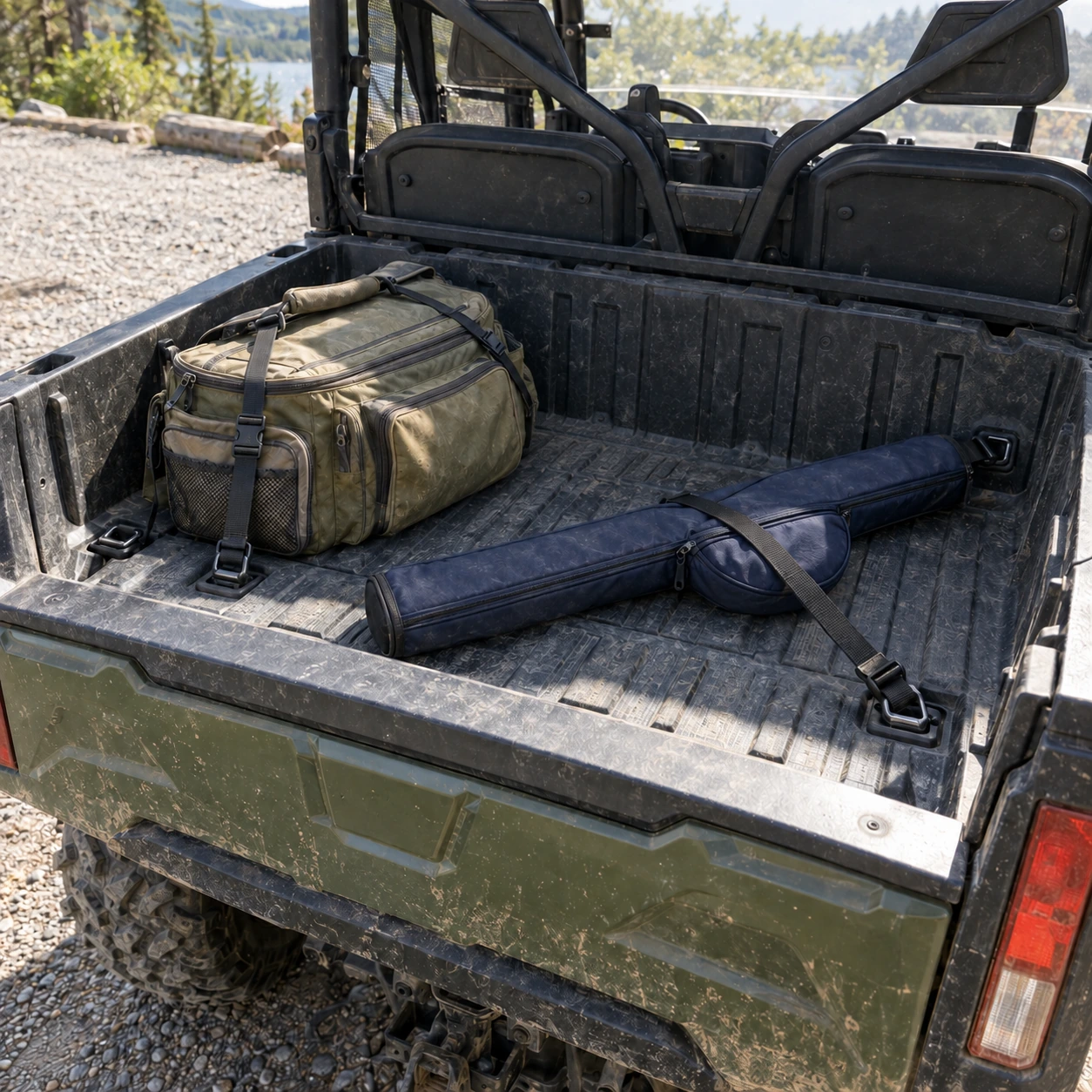
Keep access to the equipment you need for the ride. Fishing tackle should not bury a required safety item or make someone reach around an exposed hook to retrieve it. Give each load a defined place, with restraints suitable for that vehicle and luggage. Polaris identifies designated cargo-box securing points in its XD 1500 documentation. That is a useful reminder to identify the actual points on your machine rather than assume any rail or plastic edge will do.
Build one kit for the walk
Think in three groups. They can share a bag where appropriate, but each has a different job when you unload.
Rod protection. A suitable case keeps the rod from becoming the longest loose object in the bed. Pack it so the rod and reel can be removed without dismantling the rest of the load. Check the case's length against the available space before fastening it. Do not count on a projecting rod tip surviving a rough ride or a crowded parking area.
Dry, small equipment. Give the phone, portable sonar and required accessories a protected place you can identify immediately. The Spanish-language Deeper guide shows the kind of compact fishing sonar that belongs in this group. Small size makes a device easy to carry, but also easy to lose beneath larger luggage. Follow the exact unit's storage and care instructions, and keep its small fittings together. A charging cable threaded through a load restraint is a sign that the packing arrangement needs another look.
Tackle and the return load. Close tackle containers properly and keep hooks contained. Leave room for what comes back in a different condition: a wet net, muddy footwear or damp protective clothing. A separate return bag prevents that change from becoming a problem for the electronics pouch. It also makes the final vehicle check simpler.
Rehearse the first minute after parking
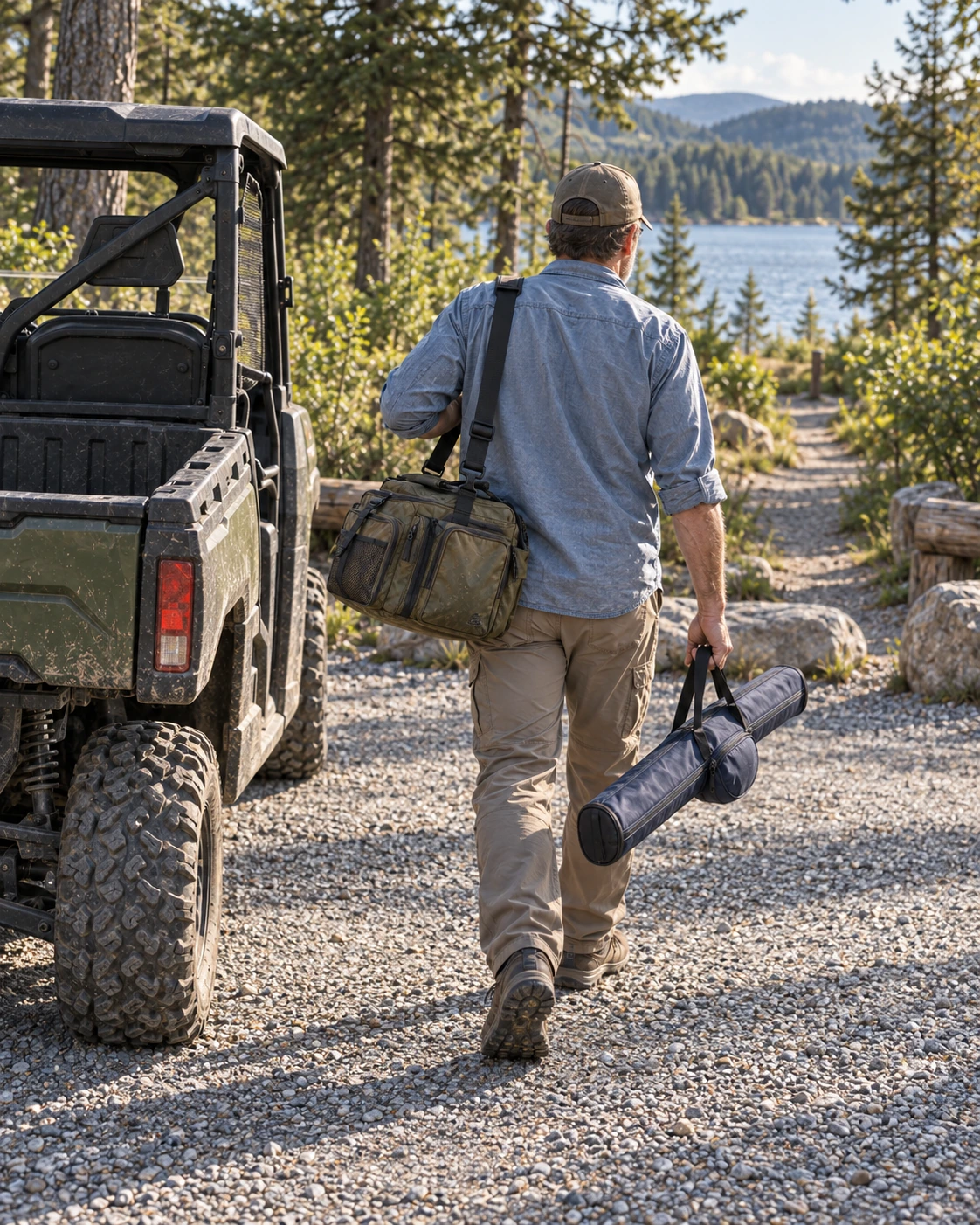
With the UTV parked and secured as its manual requires, try removing the bank kit. Can you reach it from a stable standing position? Can you carry it without dragging a case, scattering loose accessories or leaving another load unsupported? If not, change the layout before the trip. A second deliberate walk can be more sensible than an overloaded first one.
On the return, account for the rod, reel, sonar and tackle before closing the bags. Isolate wet items, follow the equipment's cleaning and drying instructions, then secure the load again for the ride. The arrangement has worked when the fishing kit can leave the UTV and return to it without turning the whole cargo bed into an unpacking area.